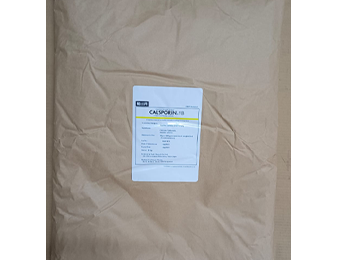
Calsporin
CALSPORIN® is a live microbial product for poultry, swine, cattle, horse and etc.

Optimizing the gut microbiota for livestock
Poultry Swine Cattle Horse Quail
Optimizing the gut microbiota for livestock
Poultry Swine Cattle Horse Quail
CALSPORIN®: Proven safety for more than 35 years of usage.
- CALSPORIN® is a live microbial product for poultry, swine, cattle, horse and etc. containing Bacillus subtilis as its active ingredient.
- · In Japan, it was approved as feed additives (Classification = Probiotics) effective for improving productivity, including improving growth and feed conversion rates, for swine and cattle in 1995 and for poultry in 1996.
- · U.S. : Listed in the official publication issued by AAFCO as a type of microorganism reviewed by the FDA as “Generally Recognized As Safe (GRAS)” for use as feed from a safety perspective. Available as “Direct-Fed Microorganisms (DFMs)” found to present no safety concern.
- · Europe : Authorized as a zootechnical feed additive (functional group: gut flora stabilizer) by the European Food Safety Authority and meets all safety standards in the EU guidelines.
- CALSPORIN® ORGANIC is listed by OMRI (the US Organic Materials Review Institute) for organic production.
Application & Features
- · Bacillus subtilis, the active ingredient in CALSPORIN®, is an aerobic bacterium. It is not an intestinal bacterium, therefore, it does not colonize in the intestines nor does it propagate like indigenous intestinal bacteria. When CALSPORIN® is supplied at a single dose, they pass through the alimentary track with feces in few hours to several days. Daily supplementation of CALSPORIN® is strongly recommended for livestock species that are constantly exposed to many and different types of stress.

- · CALSPORIN® is a highly stable product that is heat-resistant and accommodates well with pelletizing process since Bacillus subtilis can form endospore (spore form).

Specifications
- Product name:Calsporin
- Active ingredients:Bacillus Subtilis C-3120
- Species:Poultry
- Livestock challenge:Feed Efficiency